The discourse surrounding Nicki Minaj’s recent viral video at the White House reveals a false notion: that artists of her caliber are beholden to the “power of the dollar.” In reality, our true power—then and now—lies in attention.
Why do people believe that declaring someone “cancelled” means anything beyond withdrawing financial support, especially for an artist like Nicki Minaj? Let me explain.
Nicki Minaj has achieved a rare feat in the current hip-hop landscape. She built an organic following through promotional club tours in the early 2010s, then soared in the streaming Era. Just last year—15 years into her mainstream career—she sold out multiple shows on a two-leg international tour. This success was driven not by industry gatekeepers but by the power of her fan base.
Now, following the White House’s post of a video featuring President Trump and First Lady Melania with a “Beez in the Trap” mashup, people are declaring her “cancelled.” Comments like “We can officially hang her up” reveal a troubling pattern: Black female artists are considered palatable until they make political declarations. We saw this with Beyoncé’s Lemonade in 2016. However, Nicki has not declared allegiance to any party. Her cheeky lyric in Lil Uzi Vert’s “Endless Fashion”—”I got a Republican doctor / Made my ass great again, MAGA”—is figurative, not literal.
Still, her association with the current administration seems enough for “the culture” to label her a Republican, and therefore oppositional to Democratic ideals. Nevertheless, what does “cancelled” even mean here?
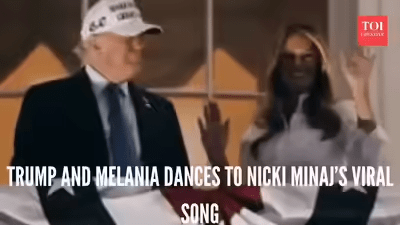
In commercial broadcasting, cancellation is a data-driven decision made by executives based on audience metrics and performance indicators. The power lies in profit. However, Nicki Minaj isn’t chasing commercial success—she’s chasing legacy. To “cancel” her has no bearing on her industry standing, just as fundraising alone doesn’t resolve systemic issues. These declarations reveal a more profound misunderstanding: the power of attention.
Nicki did not rise through reality TV, where personality drives social capital. She entered the mainstream through her craft—self-penned bars on hits like “Starships” and “Bang Bang.” Her Barbie aesthetic and spastic outbursts became part of her brand, but they were always rooted in artistry. Even her most recent viral moment is a song of hers. Nicki Minaj is functioning precisely as designed in her field.
As Sarah Banet-Weiser argues, visibility and branding are not simply about being seen—they are about being legible within a commercial framework that rewards specific performances of identity over others—Nicki Minaj’s aesthetic and lyrical ambiguity challenge this legibility, especially when politicized (Banet-Weiser 2012).
The issue isn’t with Nicki Minaj the artist—it’s with Nicki Minaj the personality, one who resists political legibility. Media scrutiny has followed her since her early years, yet she continues to thrive. This moment is not new; it simply reveals how critique without analysis operates today.
Stuart Hall’s theory of encoding and decoding helps us understand how Nicki’s lyrics—intended as satire or persona—are decoded by audiences through dominant or oppositional readings, often flattening her complexity into partisan shorthand (Hall 1980).
A more critical lens shows where online political mobilization should focus: attention. Don’t like Nicki Minaj? Swipe away. The virality of the video is driven by platforms like TikTok, not by consensus. Declaring her “cancelled” based on virality weakens the ideological claims behind it. That ideology seeks to persist through its participants—much like a bacterium attaching itself to a host.
Mark Andrejevic reminds us that in digital culture, visibility itself becomes a form of labor and a means of value extraction. Nicki Minaj’s virality—whether celebrated or condemned—feeds the very system that claims to reject her (Andrejevic 2007).
bell hooks reminds us that Black women in media are often policed for stepping outside of acceptable scripts. Nicki Minaj’s refusal to conform to political or aesthetic expectations invites a familiar backlash rooted in what hooks calls “representational containment” (hooks 1992).
This rhetoric exposes the fragility of cancellation as a consumer-based model. It is time to move beyond declarations. Still, even my own analysis leans toward social pacifism. I am proposing we not react. Ugh. Quite the Mamdani moment.
Bibliography
Andrejevic, Mark. *iSpy: Surveillance and Power in the Interactive Era*. Lawrence: University Press of Kansas, 2007.
Banet-Weiser, Sarah. *Authentic™: The Politics of Ambivalence in a Brand Culture*. New York: NYU Press, 2012.
Hall, Stuart. “Encoding/Decoding.” In *Culture, Media, Language*, edited by Stuart Hall, Dorothy Hobson, Andrew Lowe, and Paul Willis, 128–38. London: Routledge, 1980.
Hooks, bell. *Black Looks: Race and Representation*. Boston: South End Press, 1992.
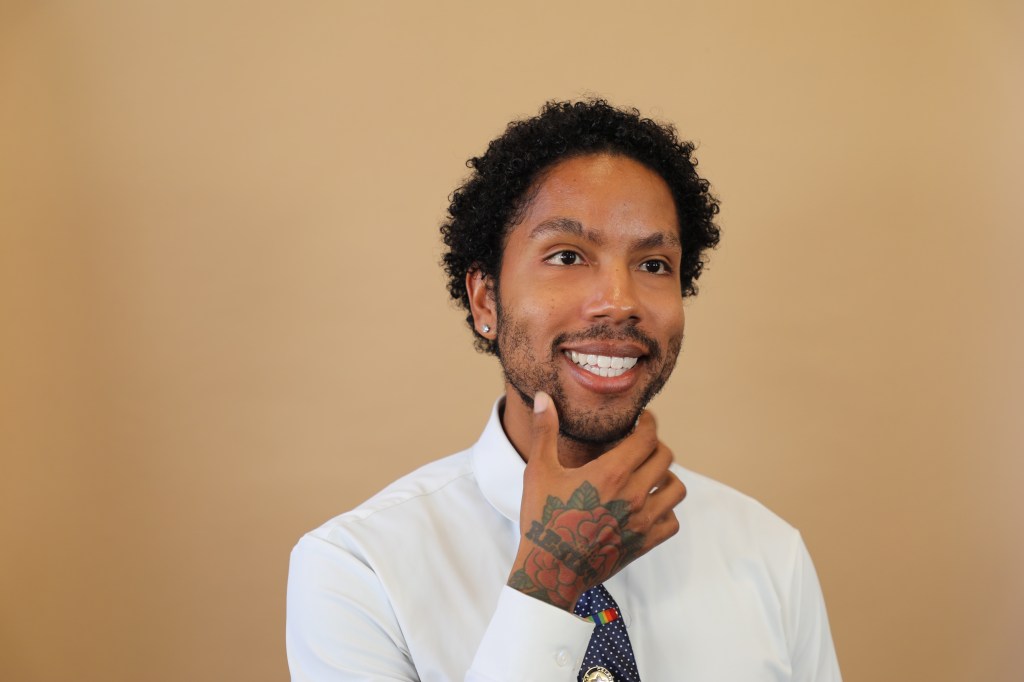
‘JAM’ Jamaal Amir McCray is a Baltimore-born, Tallahassee-based performer, writer, and PhD candidate in Theatre & Performance Research at Florida State University. His work spans radio theatre, remix culture, and ensemble-driven performance, exploring art as practice, profit, and preservation. From streaming radio plays to live solo shows and documentary film, JAMBOOM uses sonic storytelling to amplify marginalized voices and disrupt norms. He’s received multiple honors for creative and academic excellence, including the Jerry Geitka Scholarship and the Wilson-Auzenne Graduate Assistantship.
Keep Up with JAM: https://linktr.ee/JAMBOOMBOOM
 THE END TIMEZ
Leave a comment